Sculptural Travertine Coffee Table Ideas: 15 Statement Shapes Beyond Square and Round
Fifteen statement stone coffee table shapes, from chiseled slabs and pebble forms to arches, hourglass pedestals and kidney curves, and which one suits your room.
Square and round travertine tables are classics, but stone can take far more interesting shapes. This guide to the sculptural travertine coffee table looks only at statement shapes: chiseled edges, pebble forms, arches, long raw slabs, hourglass pedestals, kidney curves and floor-level tables. A few are marble, stone-look or wood on stone, and we say so where they appear. For sizing, finishes and care, see our travertine coffee table guide. At the end of this one you will find a quick guide to which shape suits which room and sofa.
1. Choose a slab with a chiseled, organic edge
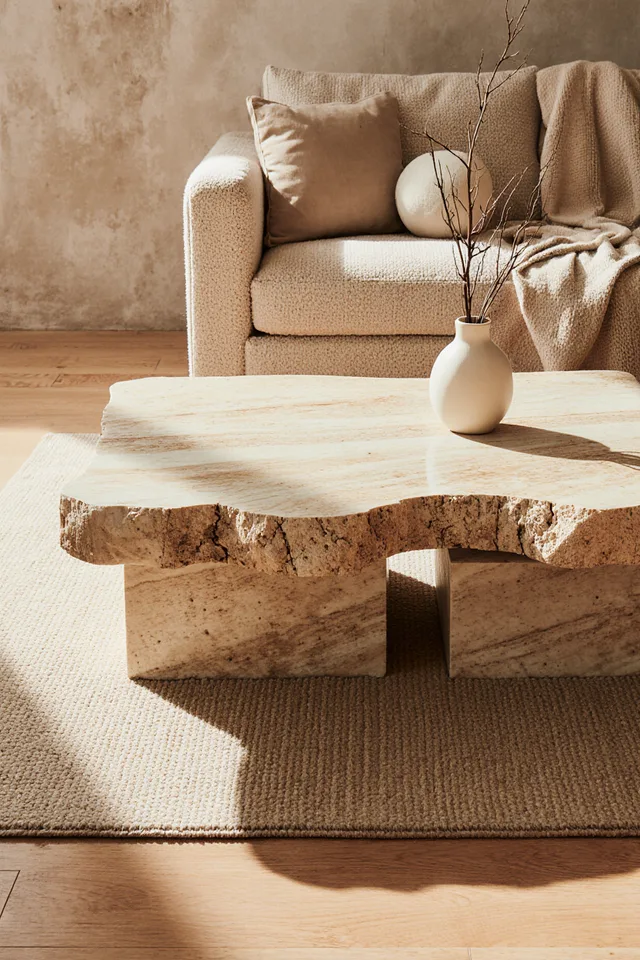
A thick travertine slab with a rough, chiseled edge is the most sculptural shape you can choose. The honed top is smooth and practical, while the raw edge shows the stone’s pores and layers, and low sun picks out every ridge.
2. Go for a pebble shape with no corners
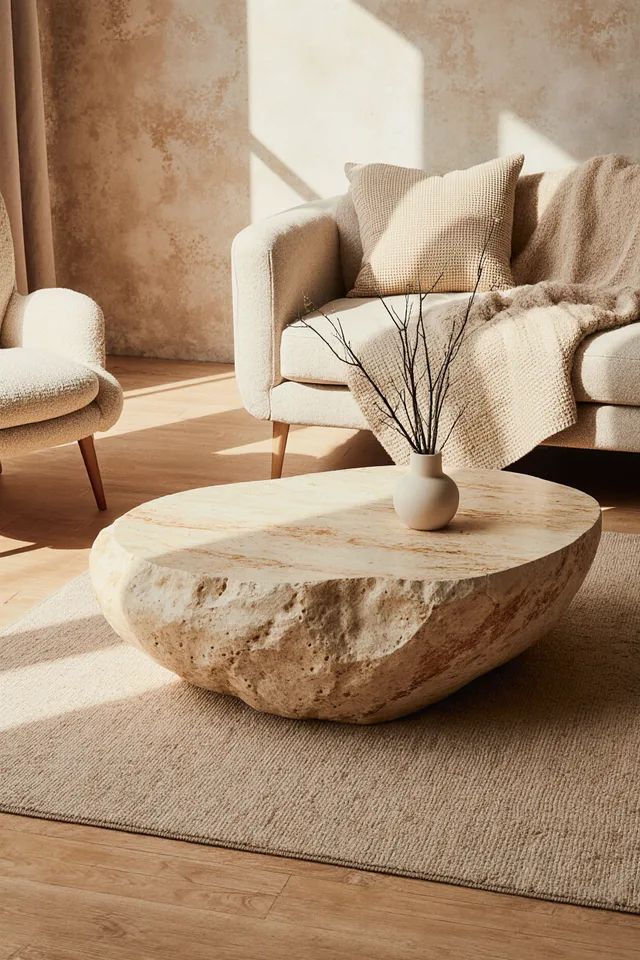
A table shaped like a river pebble has no corners at all, which makes it feel soft in a room of straight lines. The flat honed top holds a cup, and the rough, rounded sides look like they came straight from the quarry.
One warm room in your inbox, every Sunday.
3. Pick a table with two arches instead of legs
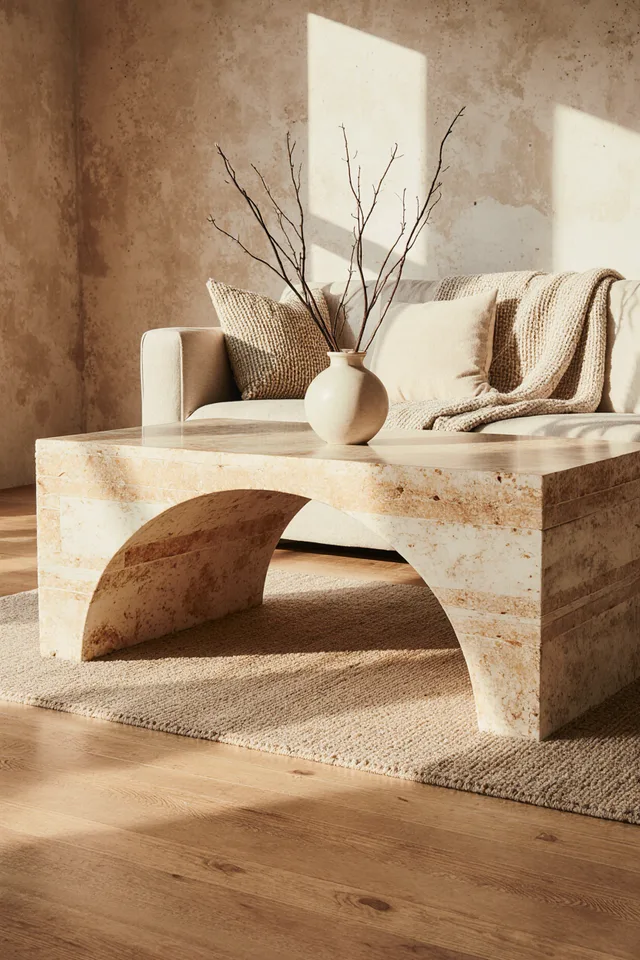
Two wide arches cut into a solid block turn a heavy stone table into something that looks almost light. The curves echo arched doorways and mirrors, and the layered bands in the travertine show up along the sides.
4. Use a long raw-edge slab in front of a big sofa
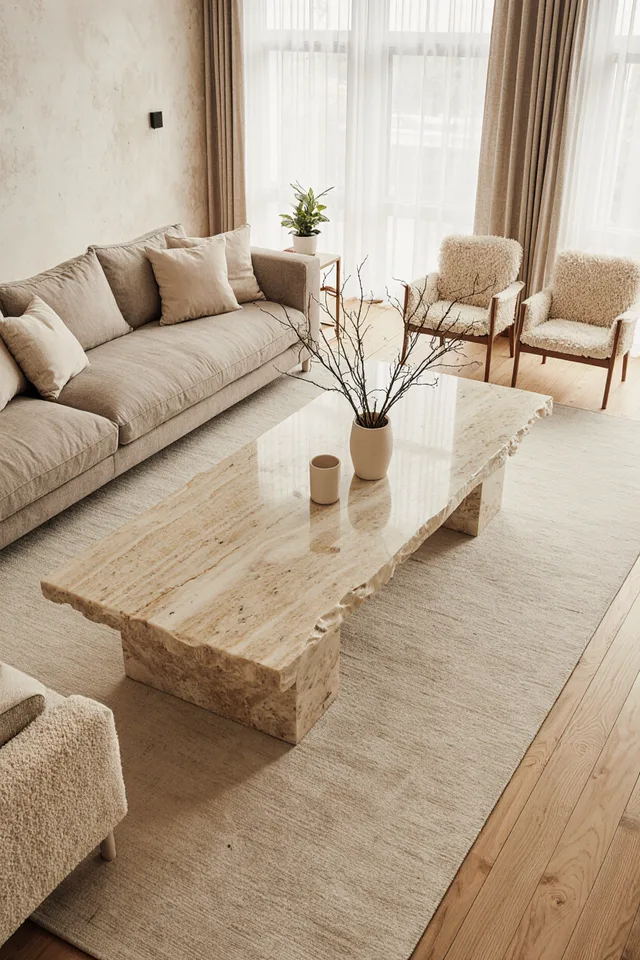
A long slab with rough edges on two block bases suits a big sofa and a pair of armchairs. It anchors the whole seating area and gives everyone a spot for a cup without anything else in the way.
5. Set a chiseled slab between two armchairs
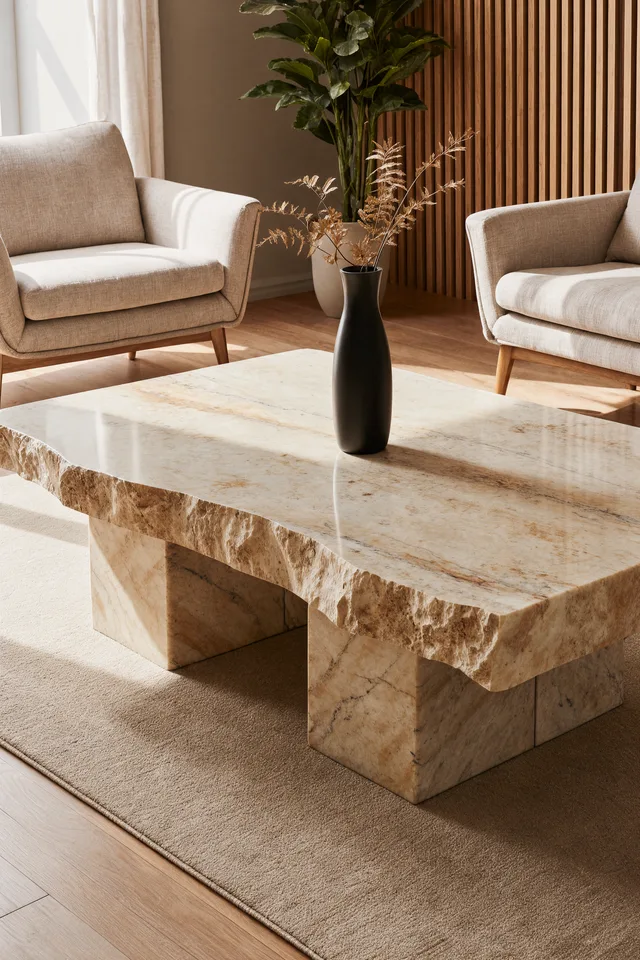
Between two armchairs, a coffee table becomes the center of conversation. This thick slab with a deeply chiseled edge and warm caramel veining is the kind of piece people reach out to touch, and a single dark vase sets off the light stone.
6. Try a round top with a hand-chiseled rim
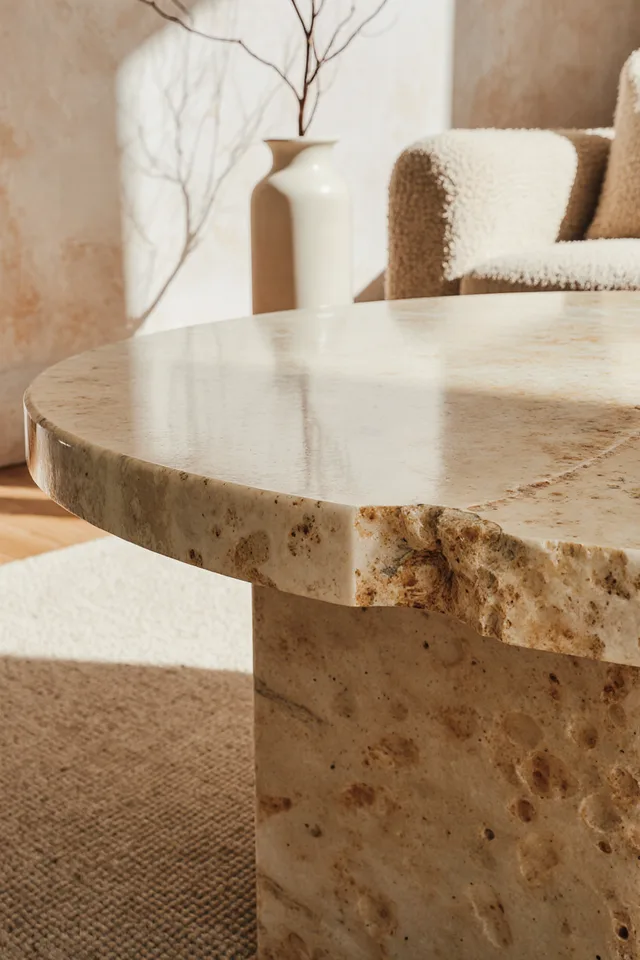
A round top with a hand-chiseled rim combines the softness of a circle with the drama of raw stone. Up close, the natural pores and caramel tones in the travertine look almost like a painting.
7. Curve a kidney-shaped table around a curved sofa
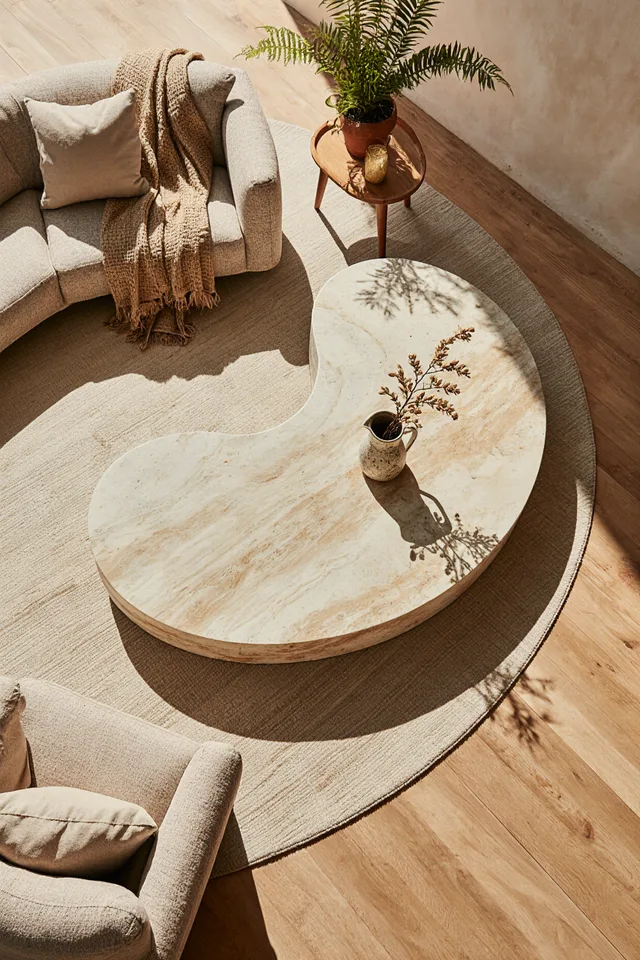
A kidney-shaped table follows the curve of a rounded sofa, so everyone can reach it. Seen from above on a round rug, the shapes fit together like pieces of a puzzle.
8. Choose an hourglass pedestal
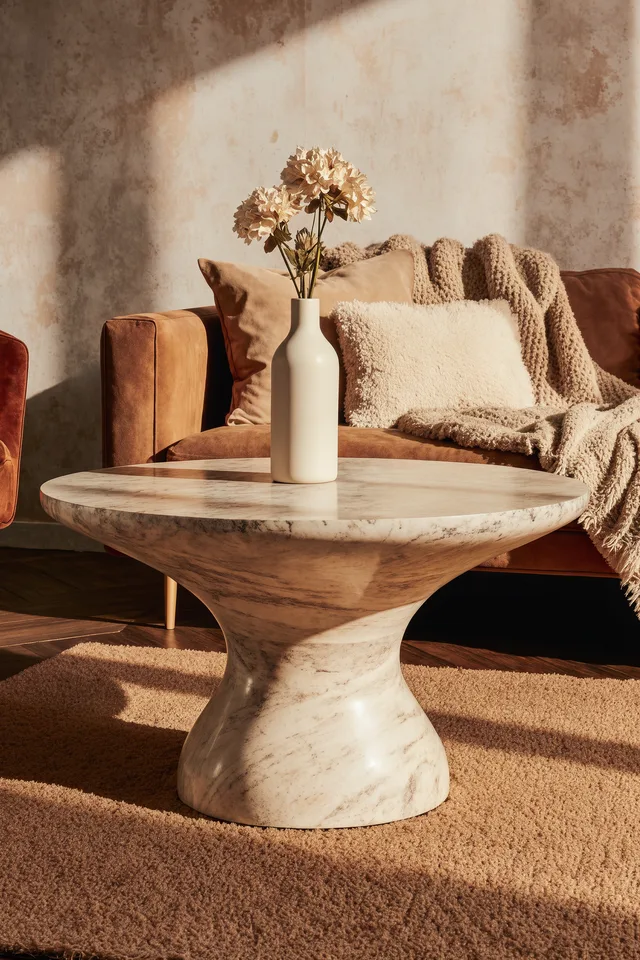
An hourglass pedestal looks like a single carved piece of stone. This one is marble with soft grey veining, which pairs well with a cognac leather sofa; the same shape is also made in travertine.
9. Pick a box shape with an open shelf
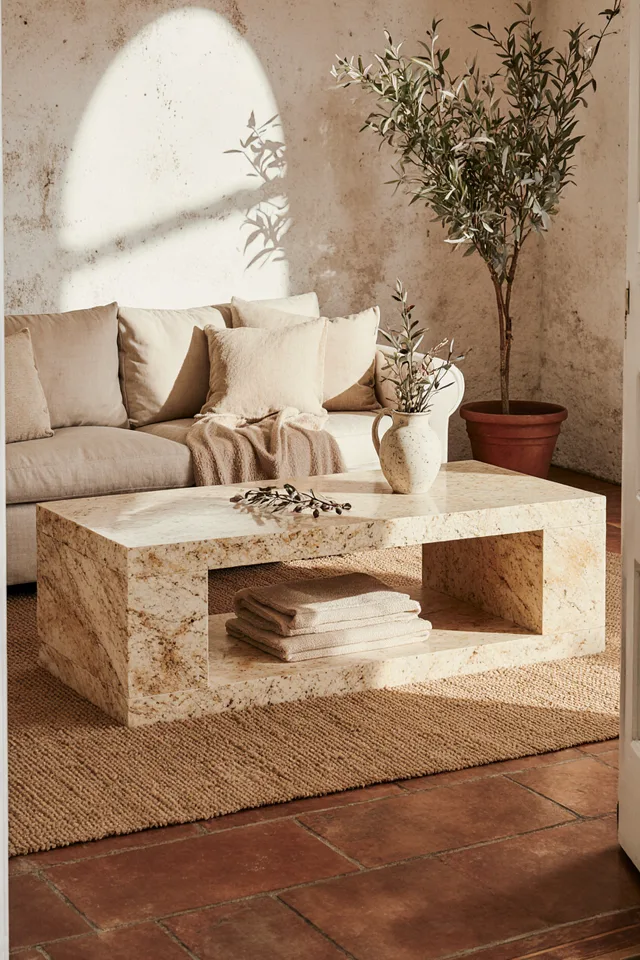
A box-shaped stone table with an open shelf underneath gives you storage without losing the solid look. Folded throws or books on the lower shelf keep the top clear, and the terracotta floor gives it a Mediterranean feel.
10. Stack a thick top on a split block base
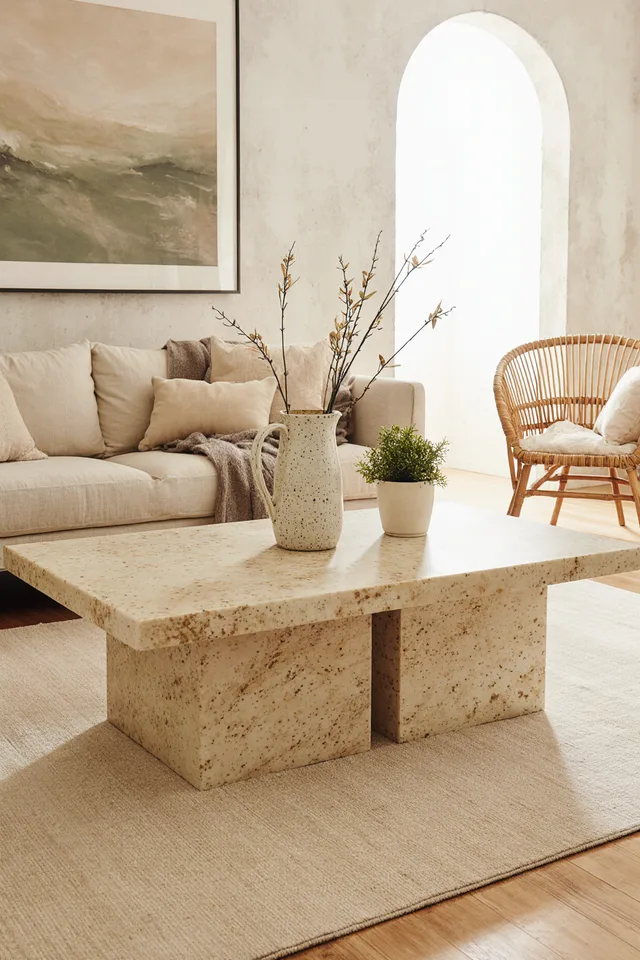
A thick top on two blocks set side by side, with a narrow gap between them, looks solid from the front and lighter from the side. Speckled cream stone hides crumbs and marks well, which makes it a practical everyday table.
11. Go low with a floor-level stone table
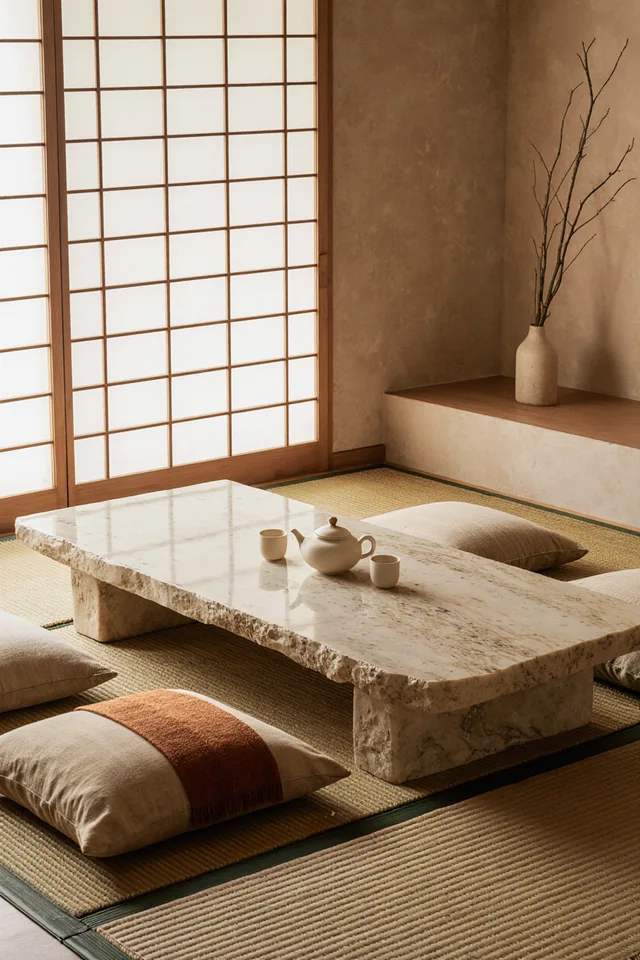
A very low stone table with floor cushions instead of a sofa turns a corner into a tea room. The raw edge and short block legs keep it grounded, and the shoji screens soften the light.
12. Mix a live-edge oak top with stone legs
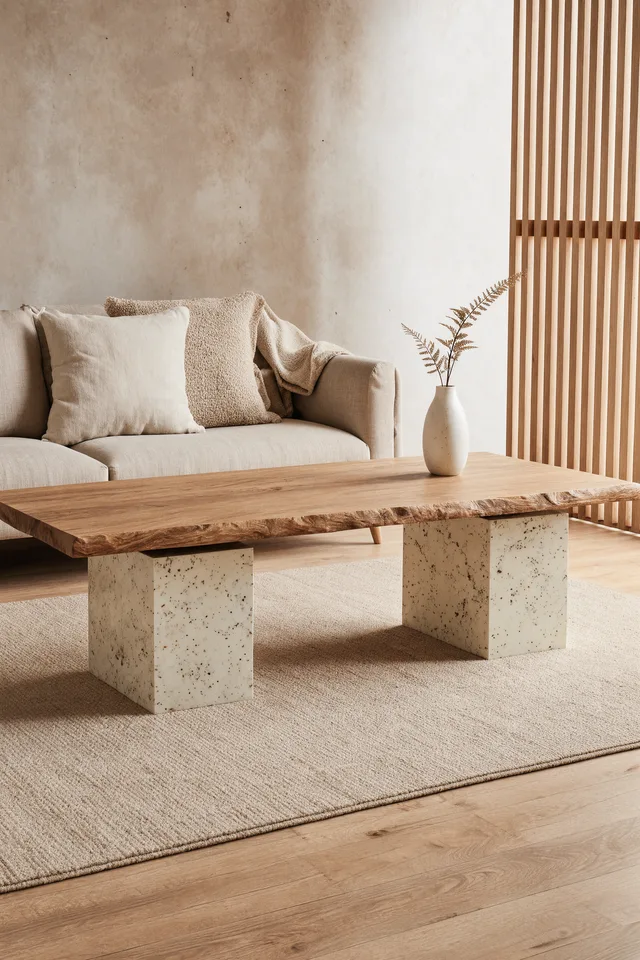
Wood on stone is a natural pairing. A live-edge oak top on two speckled stone blocks brings warmth to a stone table, and the oak slat screen nearby ties it together. For more on combining the two, see our guide to mixing boucle, travertine and wood.
13. Put a stone top on a brass frame
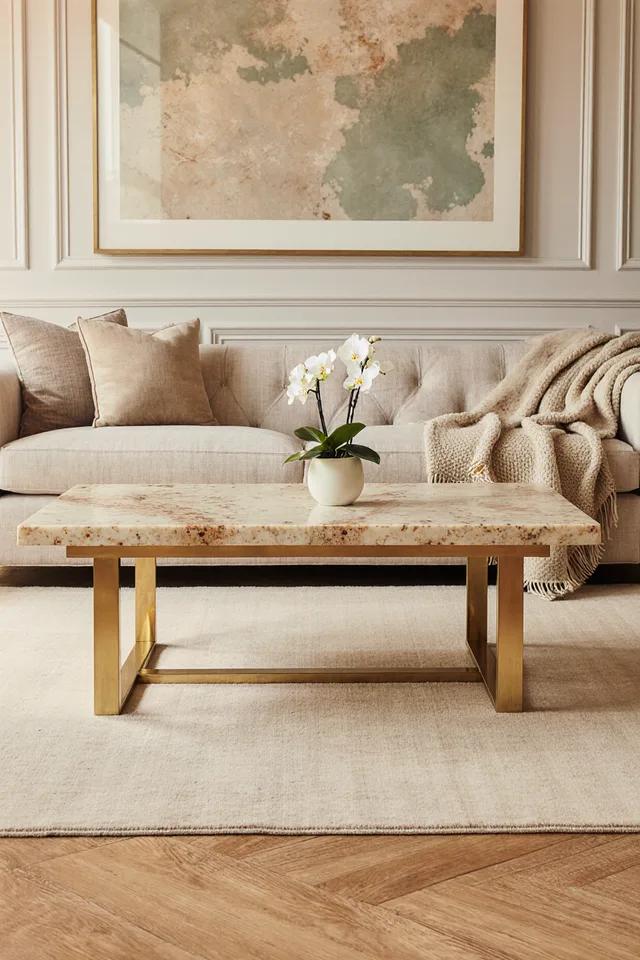
A stone top on a slim brass frame is the lightest-looking stone table there is. It suits a more classic room with paneled walls and a tufted sofa, and the brass picks up warm tones in the stone.
14. Use two cubes as a movable coffee table
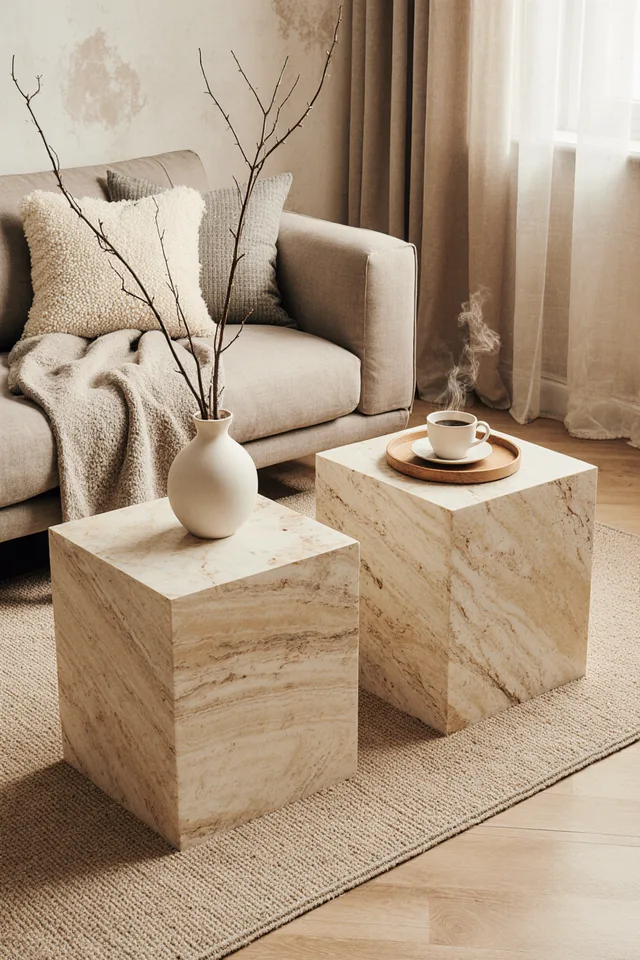
Two travertine cubes can stand side by side as a coffee table or move apart as side tables when you have guests. The banded veining makes each one a small sculpture.
15. Place a plinth table by the fire
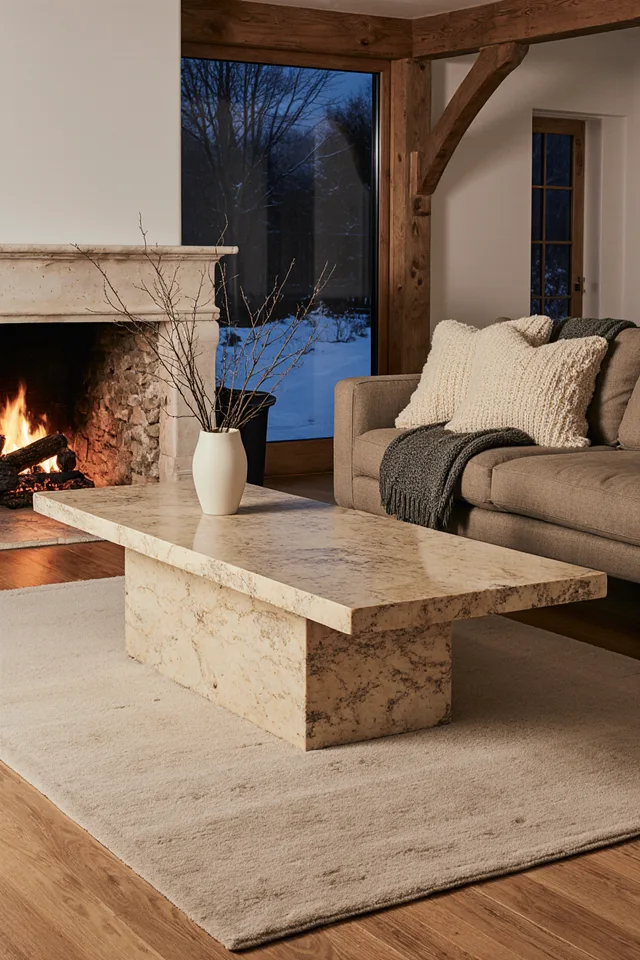
A long stone top on a single wide plinth works especially well near a fireplace, where its pale color reflects the warm firelight in the evening. For more ways to make the room warm in winter, see our cozy winter living room ideas.
Which shape suits your room
Start with your sofa and the size of the room, then pick the shape:
- Chiseled-edge slab: a medium or large room where the table is the main feature (ideas 1, 5 and 6).
- Pebble or round: small rooms, tight walkways and homes with children, since there are no corners (ideas 2 and 6).
- Arched: rooms with arches elsewhere, and anywhere a solid block would feel too heavy (idea 3).
- Long raw slab: a long sofa or a sofa with two armchairs facing it (ideas 4 and 5).
- Kidney: only with a curved or rounded sofa (idea 7).
- Hourglass pedestal: deep sofas and leather seating, where legs would get in the way (idea 8).
- Box with a shelf: rooms that need storage without extra furniture (idea 9).
- Low floor table: floor cushions or very low seating only (idea 11).
- Two cubes: rooms that change for guests, since the cubes move apart (idea 14).
Before you buy. Stone tables are heavy and hard to return. Ask for the weight, check how it will be delivered and carried in, and check that your floor and stairs can take it.
Size and care. Clearances, height and how to look after travertine are all in our travertine coffee table guide. For a stone table in the dining room, see our warm dining room ideas.