Wall Decor Ideas for Big Blank Walls: 16 Warm Options (and the 57-Inch Rule)
Sixteen warm ways to fill a big blank wall, from woven hangings and plate walls to oak slats, plus the simple measurements that make art look right.
A big blank wall can make a whole room feel unfinished, and it is hard to know whether to fill it with one piece, a group or something other than art. The sixteen ideas below use a warm, natural palette of oak, linen, plaster and stoneware, above sofas, beds, consoles and sideboards. At the end you will find the 57-inch rule and three other measurements that help any wall decor look right. If you are decorating the whole room, start with our warm minimalist living room ideas.
1. Pair a still-life print with a live-edge console
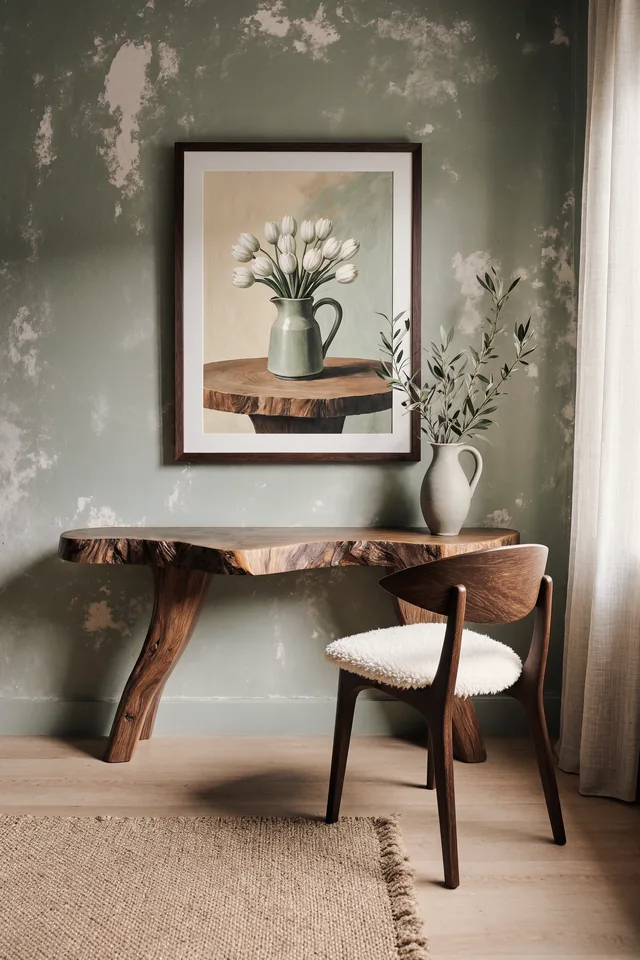
A sage plaster wall with a worn, patinated finish already does half the work. One dark-framed still life of white tulips, a live-edge walnut console and a stoneware pitcher of olive branches finish the corner without any clutter.
2. Hang two botanical prints above the bed
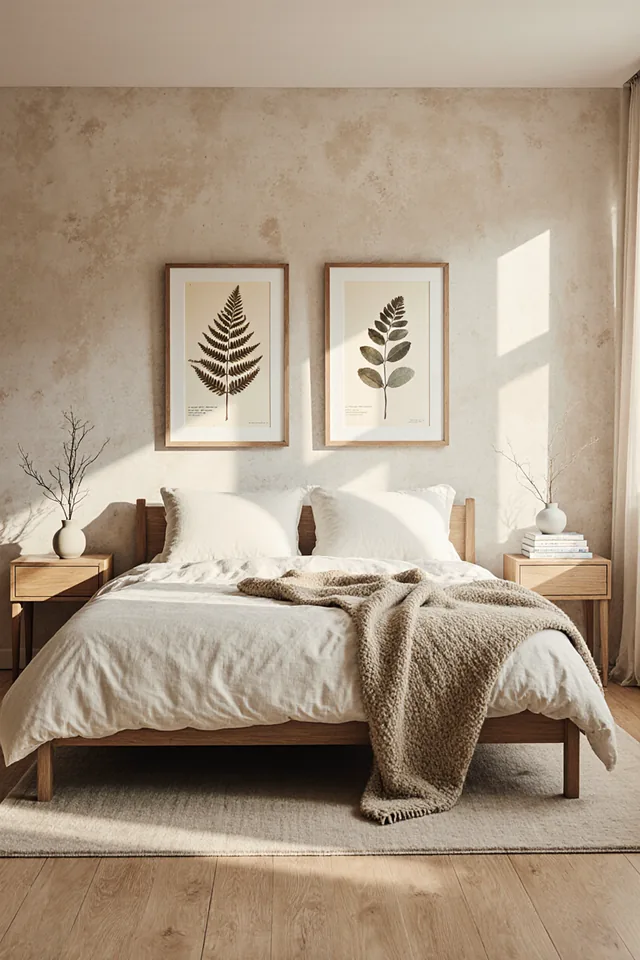
Two pressed-fern prints in thin oak frames give a wide bed wall a calm, symmetrical focus. The warm limewash wall and linen bedding keep the palette soft, so the dark leaves are the only contrast. For more on the rest of the room, see our cozy bedroom ideas.
One warm room in your inbox, every Sunday.
3. Choose one textured plaster relief
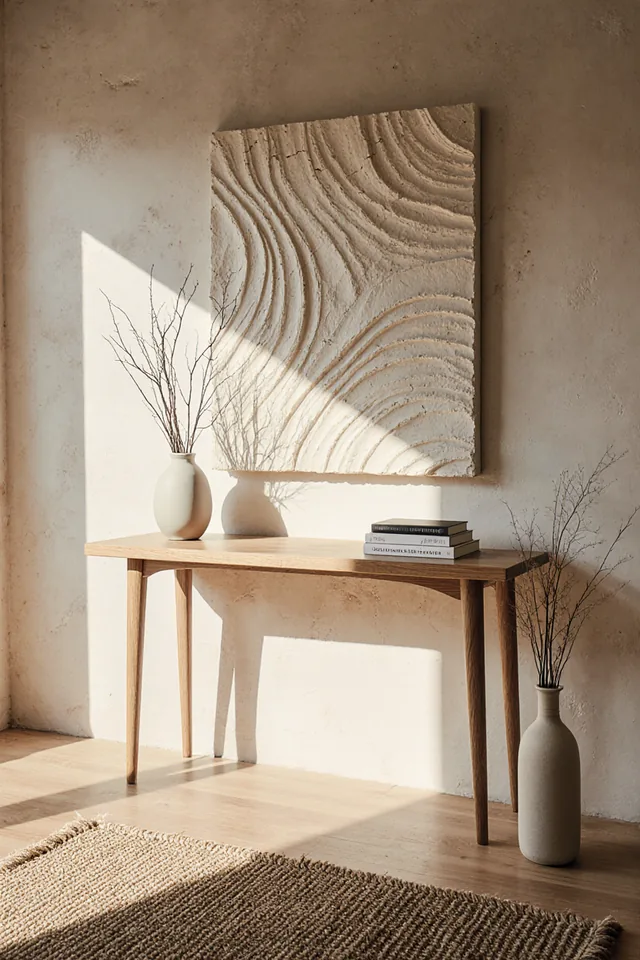
A single plaster relief with carved, swirling ridges brings texture to a plain wall without adding colour. Low side light picks out every groove, so the piece changes through the day.
4. Layer frames on a picture ledge
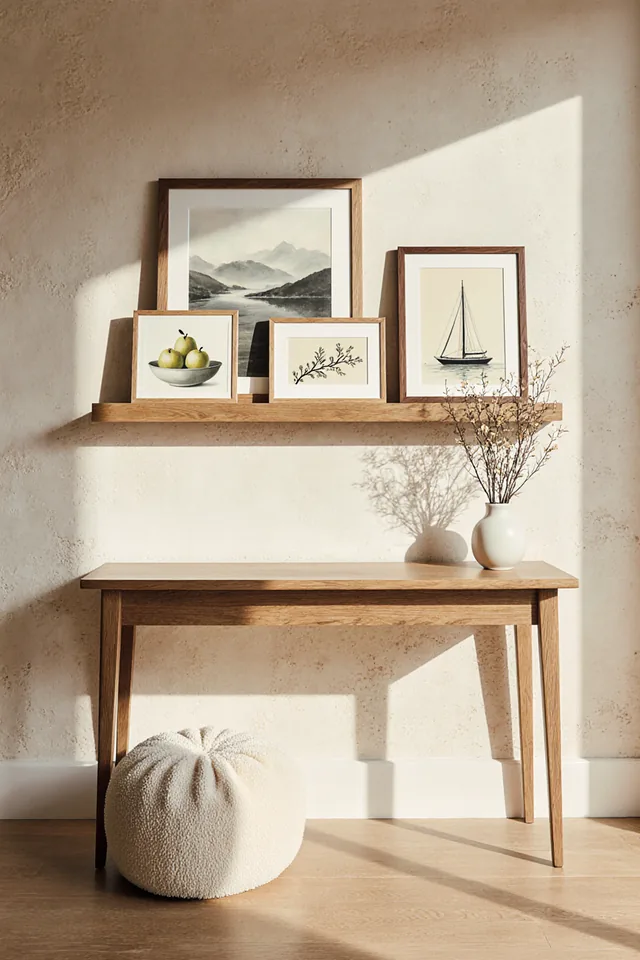
A slim oak picture ledge lets you lean and overlap frames instead of hanging each one. Mix one tall landscape with smaller still lifes and sketches, and swap them whenever you like without new nail holes.
5. Style a floating shelf as wall decor
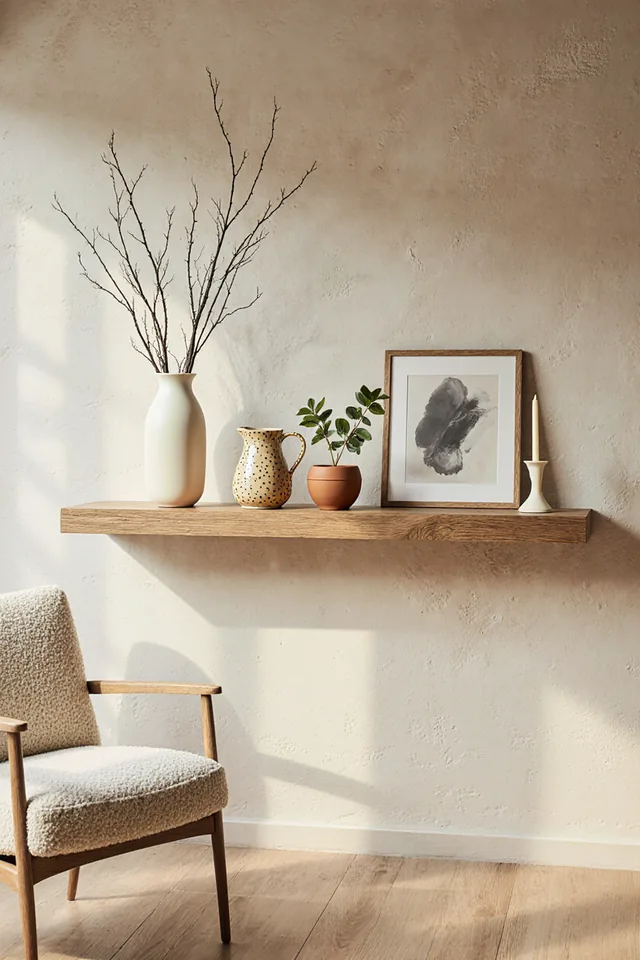
A thick floating oak shelf can do the job of art on its own. Tall branches in a cream vase give height at one end, a leaning print and a single candlestick balance the other, and a speckled pitcher and small plant fill the middle.
6. Frame a painting with two wall sconces
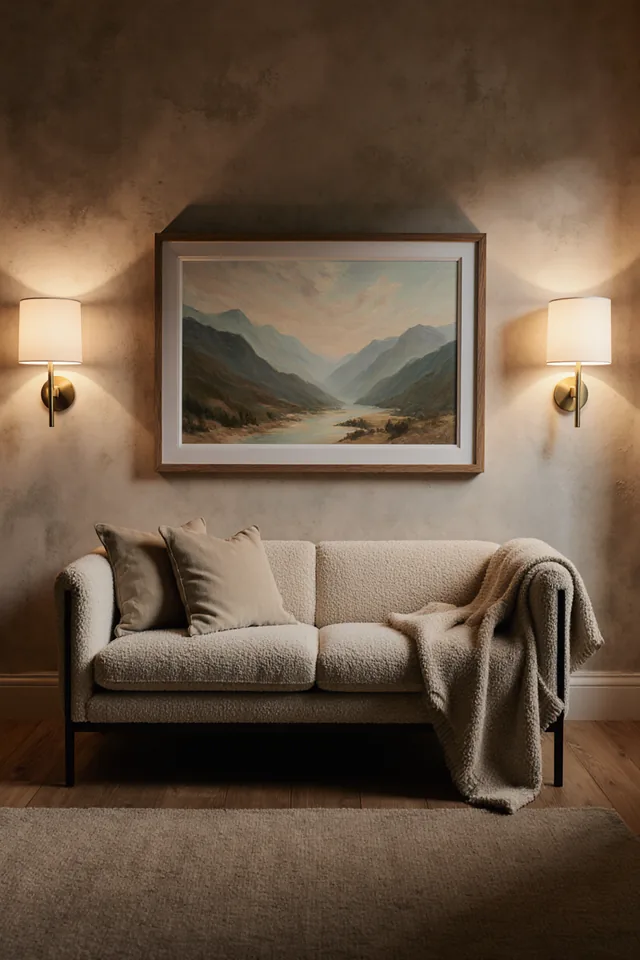
Two brass sconces on either side of a landscape painting turn a sofa wall into a lit focal point at night. The warm pools of light wash the plaster and leave the painting softly visible between them. More ways to light a room like this are in our warm ambient lighting ideas.
7. Hang black-and-white architecture photos in a row
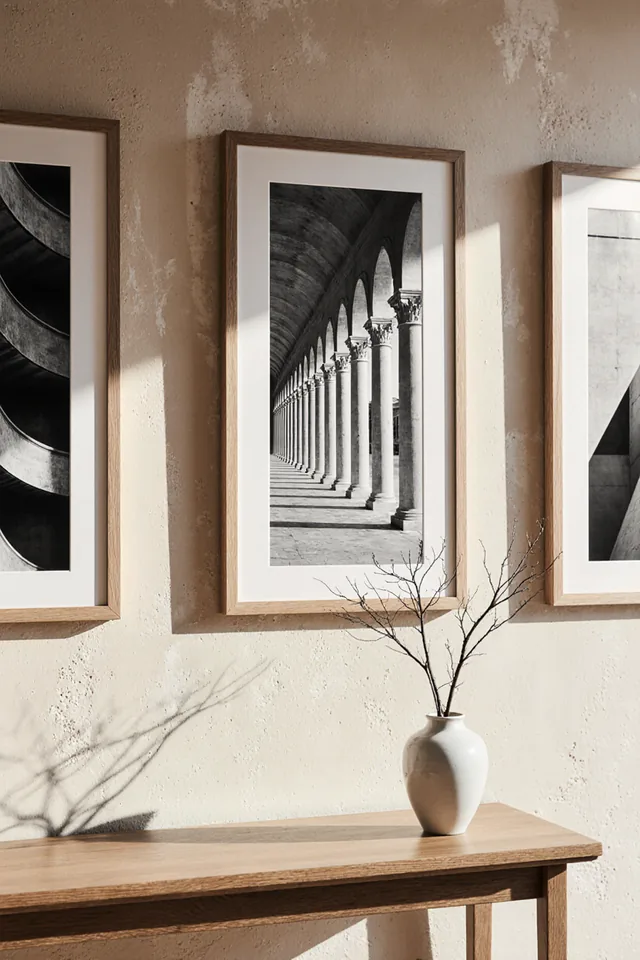
Black-and-white photos of arches, columns and concrete curves bring a quiet, graphic edge to a warm wall. Thin oak frames with wide white mats tie them to the wood furniture below.
8. Turn a hallway into a gallery
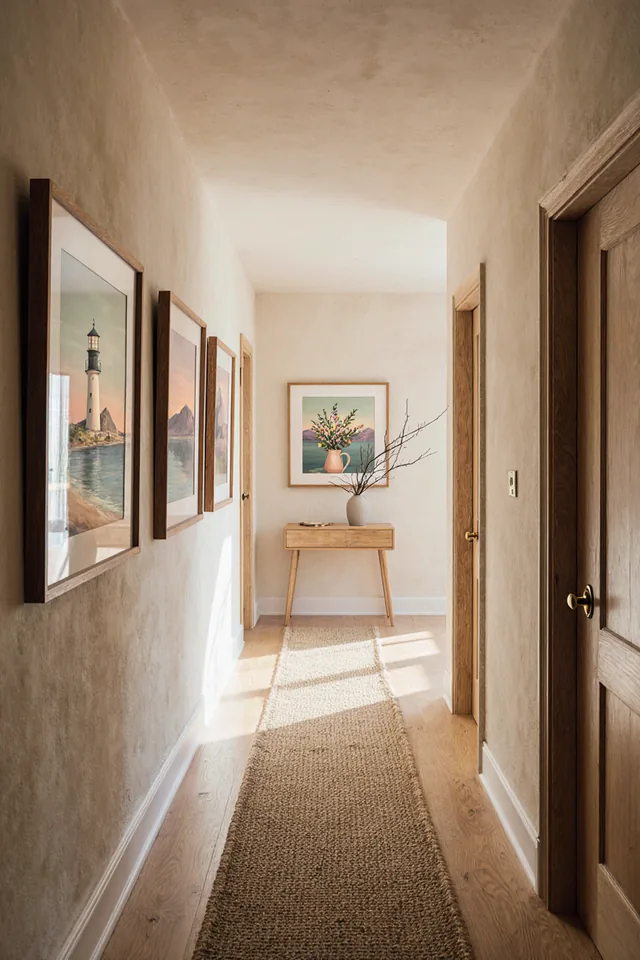
A hallway is a good place for a run of art, because everyone passes it every day. Three framed coastal paintings line one wall, and a small console with one print closes the view at the end.
9. Hang a woven textile above the bed
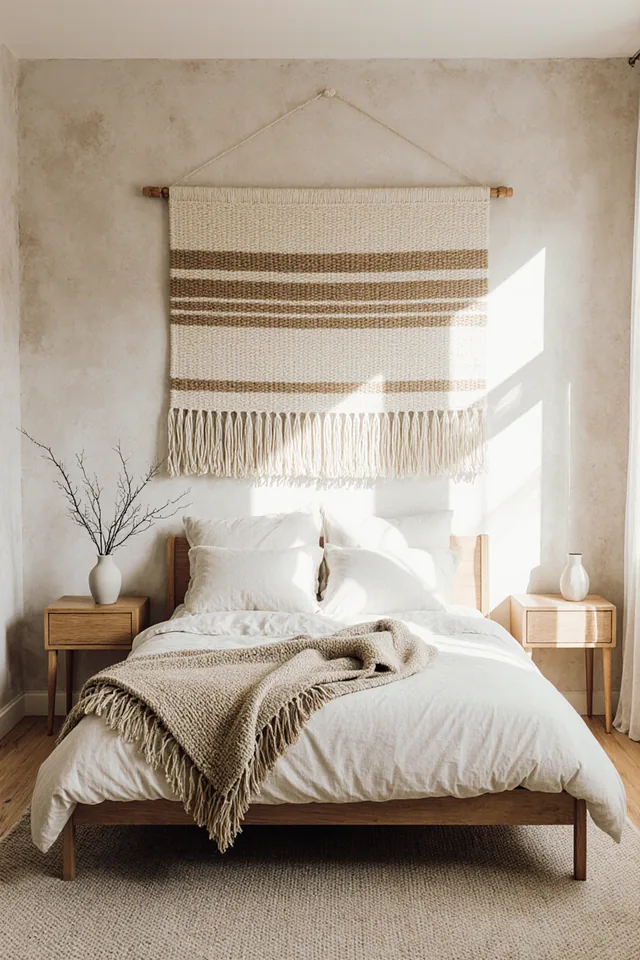
A woven wall hanging with tan stripes and a long fringe softens the bed wall in a way framed art can’t. It adds texture and warmth, and it only needs a wooden rod and a cord.
10. Build a plate wall over the sideboard
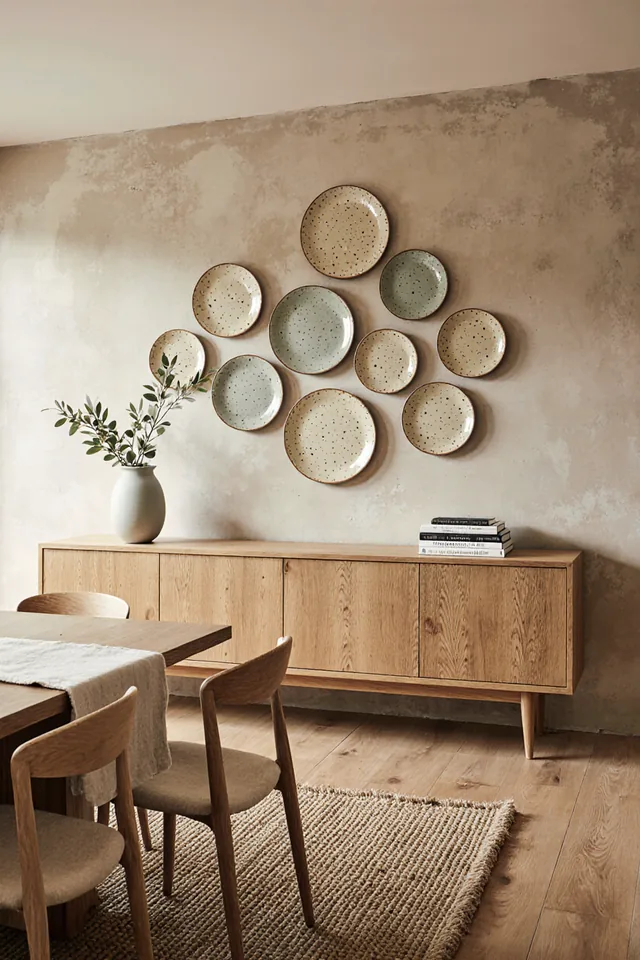
A loose cluster of speckled stoneware plates in cream and sage makes a dining wall that ties straight back to the table. Mixing two or three plate sizes keeps it organic rather than gridded. For the rest of the room, see our warm dining room ideas.
11. Go big with one oversized painting
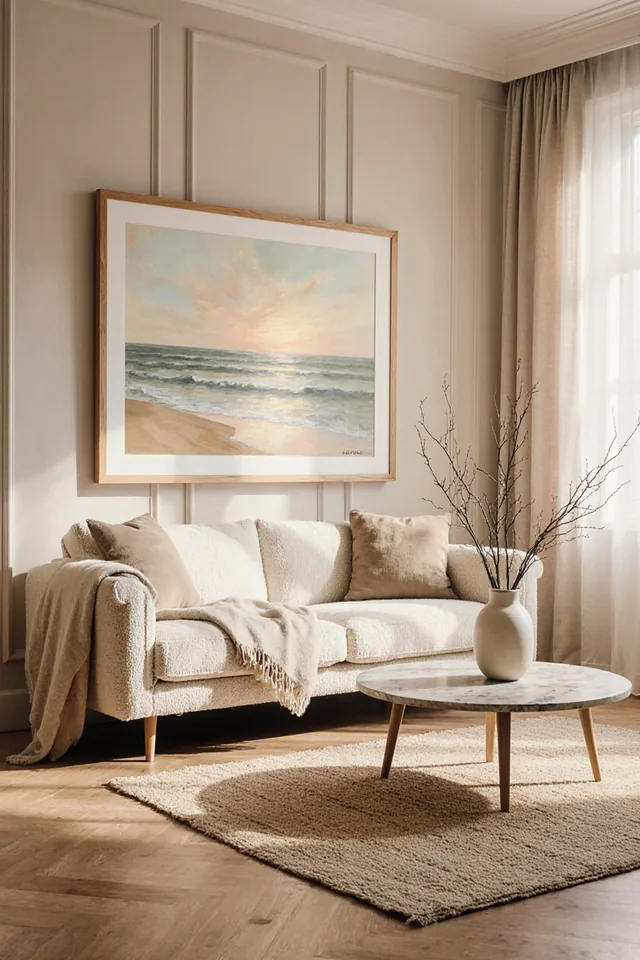
On a big blank wall, one large painting often works better than a cluster of small ones. A soft seascape in a pale oak frame spans most of the sofa and sits comfortably inside the wall panelling.
12. Pair one large piece with two small prints
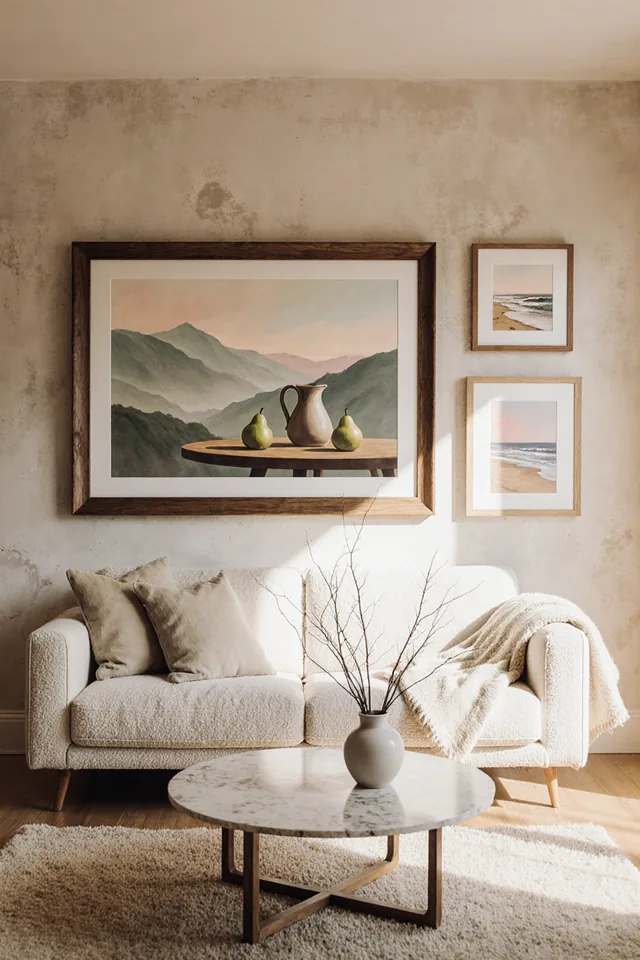
An asymmetric arrangement keeps a sofa wall relaxed. One large painting sits left of centre, and two small beach prints stacked to its right balance it out.
13. Clad the wall in oak slats with hidden light
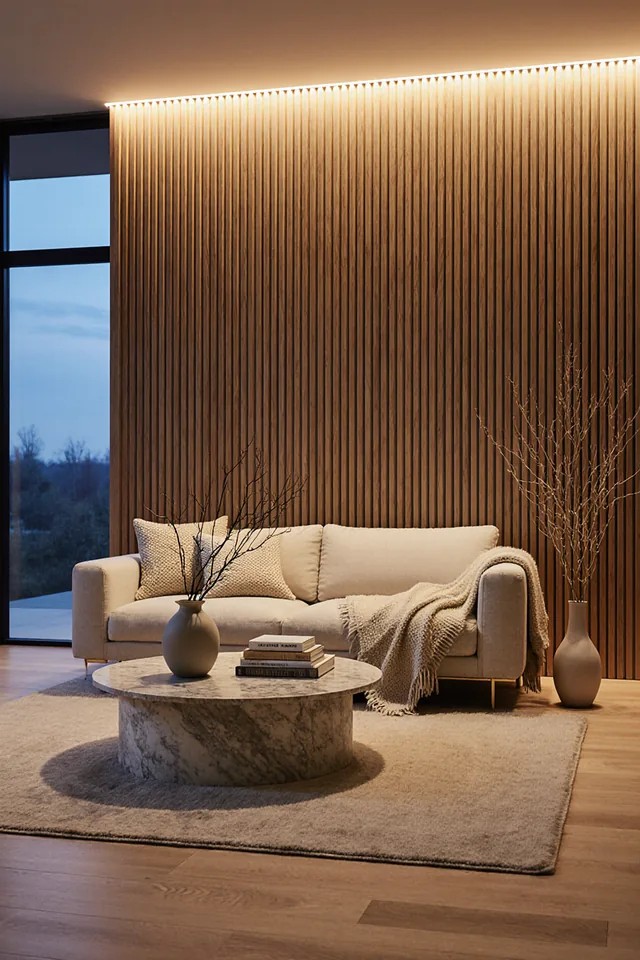
A full wall of vertical oak slats is decor without anything hanging on it. A hidden LED strip along the top washes light down the slats in the evening, and the ribs cast soft lines of shadow.
14. Bring colour with a soft abstract
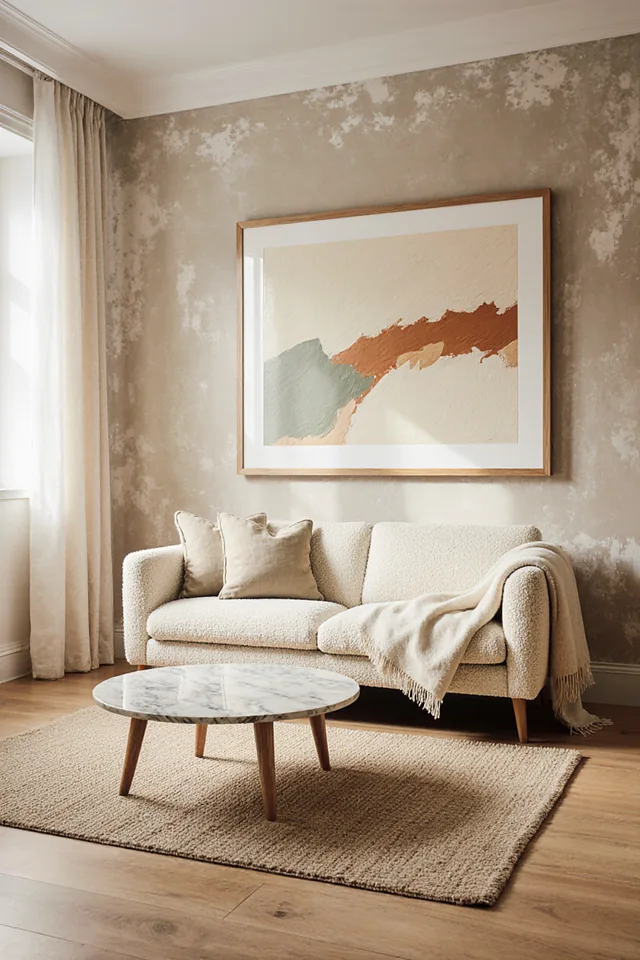
In a neutral room, an abstract with sweeps of terracotta and sage adds colour without busy pattern. Its cream background lets it sit easily on a mottled plaster wall.
15. Lean an arched floor mirror
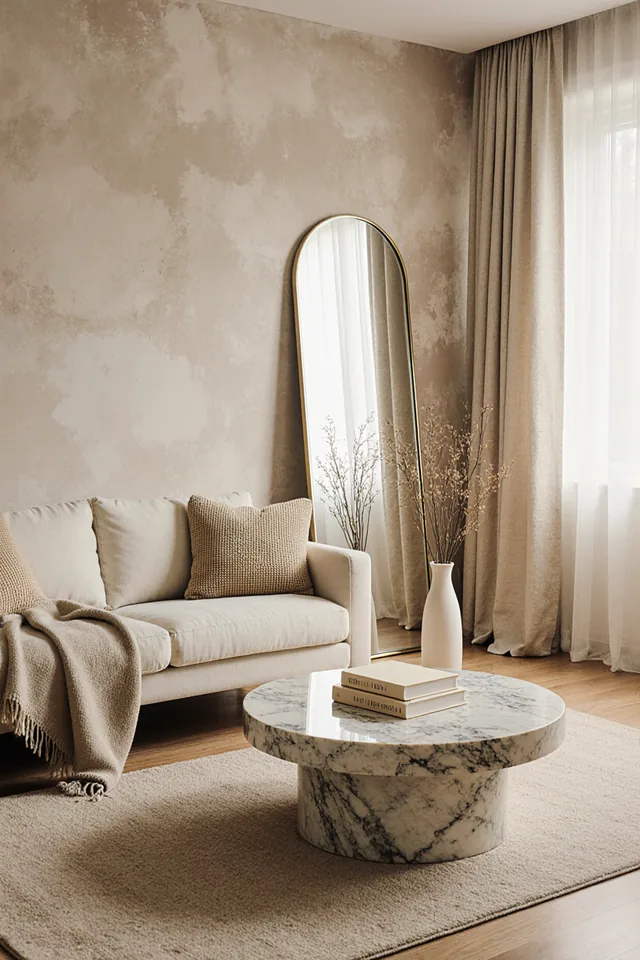
A tall arched mirror leaning against the wall adds height and bounces window light back into the room. The thin brass frame reads as decor, and the curve softens a room full of straight lines.
16. Hang a geometric woven tapestry over the sofa
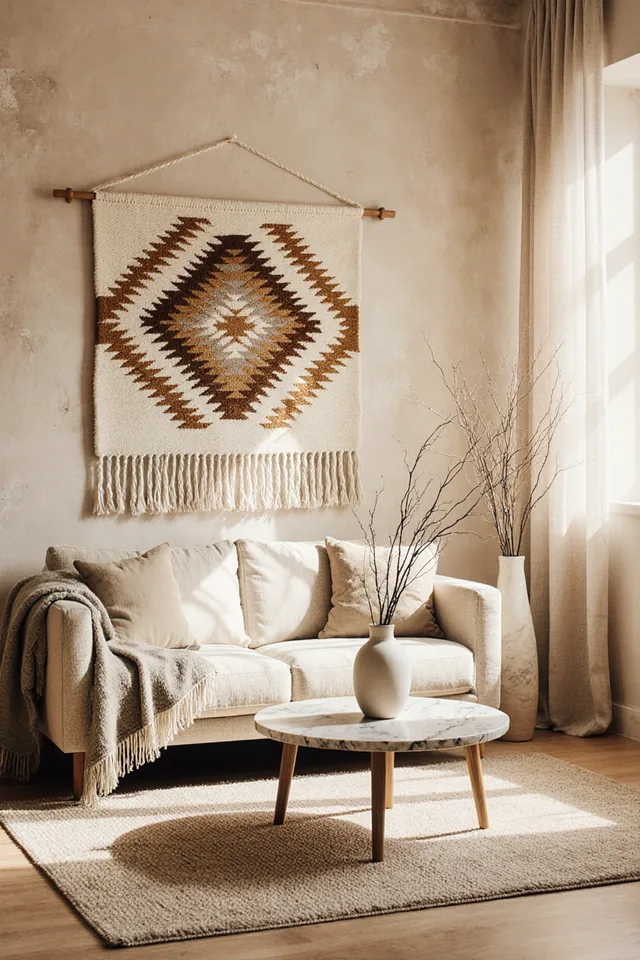
A Berber-inspired weave with a bold diamond in brown, caramel and grey gives a neutral living room one strong focal point. The cream background and fringe keep it soft, and it pairs naturally with linen and jute. For the rest of the room, see our warm minimalist living room ideas.
How high to hang art: the 57-inch rule and three other numbers
Most wall decor looks wrong for one reason: it is hung too high or too far apart. These are the measurements to start from:
- 57 inches to the centre: Apartment Therapy recommends hanging art so its centre is about 57 inches from the floor, close to average eye height and the height many galleries use. The same site notes that some people go up to 60 inches.
- 6 to 8 inches above furniture: over a sofa, console or headboard, Apartment Therapy suggests about 6 to 8 inches between the top of the furniture and the bottom of the art. Hunker gives 4 to 8 inches and notes that some designers prefer 8 to 10.
- 3 to 6 inches between frames: in a group, Apartment Therapy suggests keeping frames roughly 3 to 6 inches apart. Closer looks crowded, further apart and the pieces stop reading as a set.
- About two-thirds of the furniture: Hunker recommends art no wider than about two-thirds of the sofa or console below it.
A group is one picture. For a gallery wall, Apartment Therapy suggests treating the whole arrangement as one large picture: find its visual centre and hang that at 57 inches.
When the rules disagree. Over low furniture, the 57-inch centre and the 6 to 8 inch gap can clash. Apartment Therapy suggests bringing the art down a little so it stays connected to the furniture. Treat all of these as starting points, and tape a paper template to the wall before you drill.